History & Heritage
From a private Georgian townhouse to the most famous royal palace in the world — the remarkable 300-year story of Buckingham Palace.
1703
Year first built
13
Monarchs who have lived here
1837
Became official residence
775
Rooms in the palace
From Private House to Royal Palace
The story of Buckingham Palace begins not as a royal residence but as a private townhouse. In 1703, John Sheffield, the 1st Duke of Buckingham and Normanby, commissioned a grand mansion on the site — known as Buckingham House — as a refined London home befitting a man of his considerable standing at court.
The house passed through several hands until 1761, when King George III purchased it for his wife, Queen Charlotte. Known informally as "The Queen's House," it became a comfortable family home for the royals — a private sanctuary from the formality of the nearby St. James's Palace, which remained the official court.
The transformation from townhouse to palace began in earnest under King George IV, who commissioned the architect John Nash in 1826 to redesign and greatly expand the building. Nash's vision was ambitious, involving a grand new facade, the famous Marble Arch entrance, and an elaborate state suite of rooms.
Key Moments in Palace History
Buckingham House is Built
John Sheffield, 1st Duke of Buckingham, constructs a grand private residence on the site, replacing an earlier house known as Arlington House. The U-shaped design faces the park and reflects the architectural fashions of early Georgian England.
George III Purchases the House
King George III buys Buckingham House for £21,000 as a private family home for himself and his wife Queen Charlotte. It becomes known as "The Queen's House" and is where 14 of their 15 children are born. St. James's Palace remains the official seat of the court.
George IV Commissions John Nash
King George IV appoints the architect John Nash to transform the modest townhouse into a palace worthy of one of Europe's greatest monarchies. The works expand the building dramatically, creating new State Rooms and a grand forecourt. Nash's lavish spending leads to his dismissal in 1830; Edward Blore completes the transformation.
Queen Victoria Moves In
The 18-year-old Queen Victoria becomes the first monarch to take up official residence at Buckingham Palace, just weeks after ascending the throne. Her move to the palace establishes it permanently as the official London home of the British sovereign — a role it retains to this day. The Marble Arch is moved to its current location near Hyde Park to make way for enlarged state apartments.
The East Wing is Added
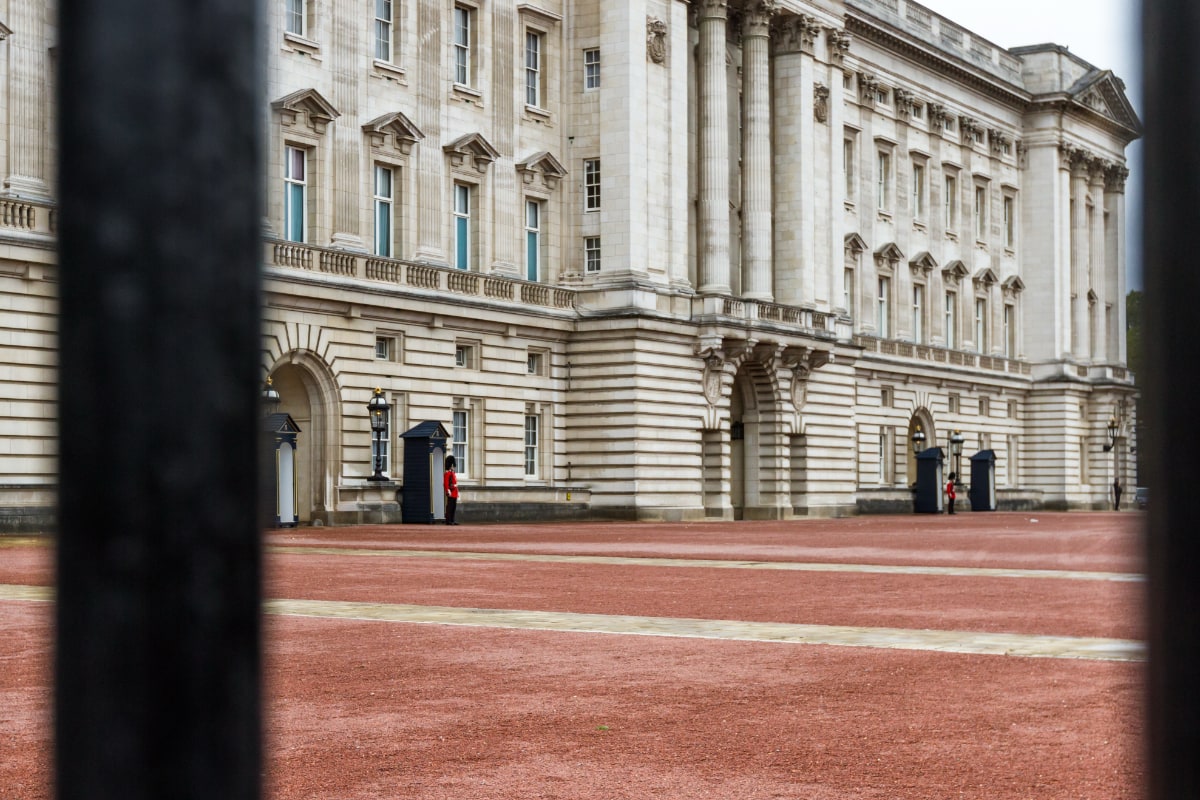
Architect James Pennethorne and later Blore enclose the forecourt with a new East Wing, adding the facade that faces The Mall and is familiar to millions of visitors today. The work uses, in part, the Caen stone removed from the Marble Arch. The wing creates the famous Quadrangle at the heart of the palace.
The Portland Stone Refacing
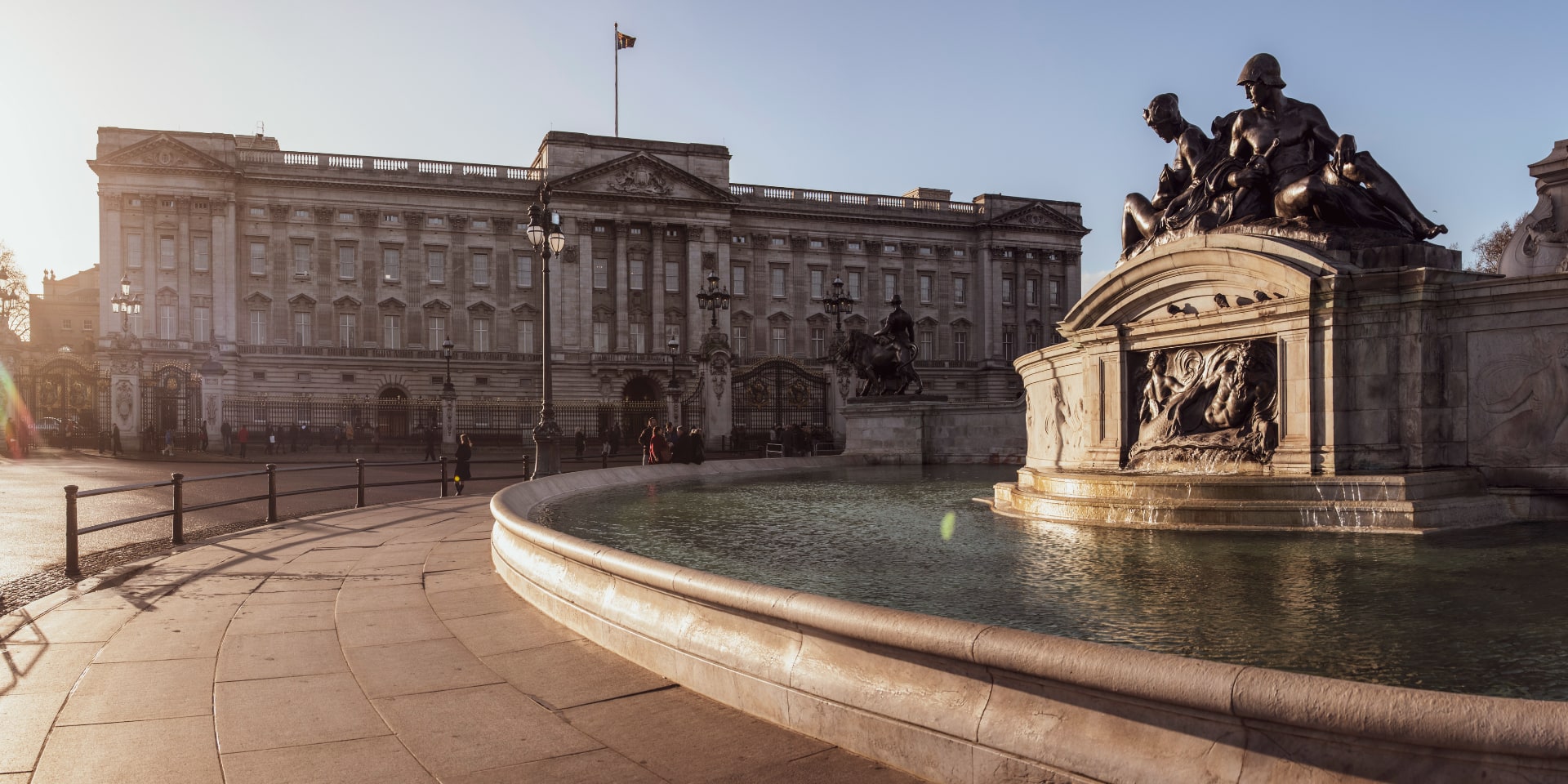
The East Wing facade — originally faced in Caen limestone, prone to weathering — is entirely refaced in Portland stone as part of works to create the Queen Victoria Memorial. Architect Sir Aston Webb supervises the transformation in just three months, creating the pale stone facade the palace is known for today.
The Palace at War
During the Second World War, Buckingham Palace is hit by German bombs on nine separate occasions. The Palace Chapel is destroyed in 1940. Famously, King George VI and Queen Elizabeth refuse to evacuate, winning enormous public respect. "I'm glad we've been bombed," the Queen reportedly said. "It makes me feel we can look the East End in the face." The palace becomes a powerful symbol of national resilience.
The Coronation of Elizabeth II
The coronation of Queen Elizabeth II draws the world's eyes to London. The palace serves as the focal point of celebrations, with the new Queen appearing on the famous balcony for the first of what would become hundreds of appearances. The first televised coronation reaches 27 million viewers in Britain alone.
Opened to the Public
Following the Windsor Castle fire and consequent fundraising, the State Rooms at Buckingham Palace are opened to the public for the first time during the summer months. Nearly half a million visitors attended in the first year. Summer openings have continued every year since, with income funding ongoing restoration of Windsor Castle.
A New Reign Begins
Following the death of Her Majesty Queen Elizabeth II on 8 September 2022, King Charles III ascends the throne — the fifteenth monarch to reign from Buckingham Palace. The familiar balcony appearances continue, now with a new generation of the Royal Family.
The Building Itself
Buckingham Palace is not a single architectural vision but the cumulative work of four centuries of royal ambition, national pride, and architectural genius.
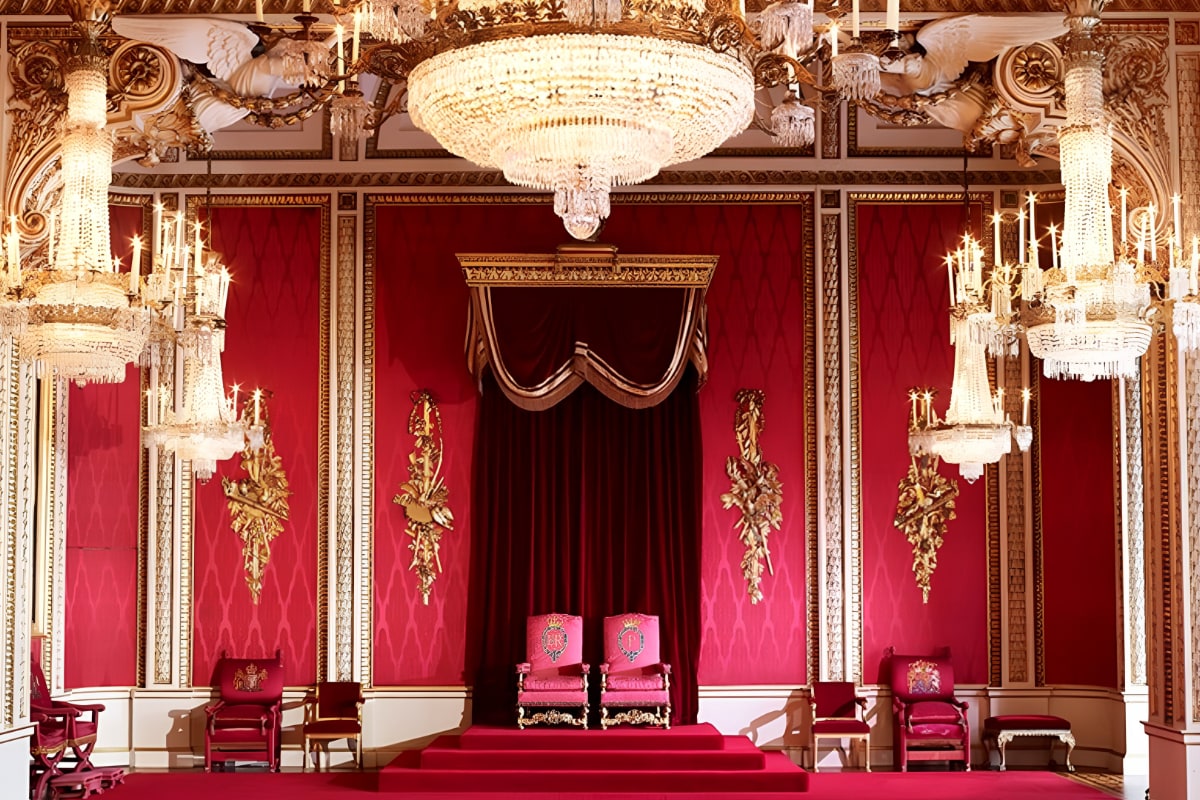
John Nash's State Rooms
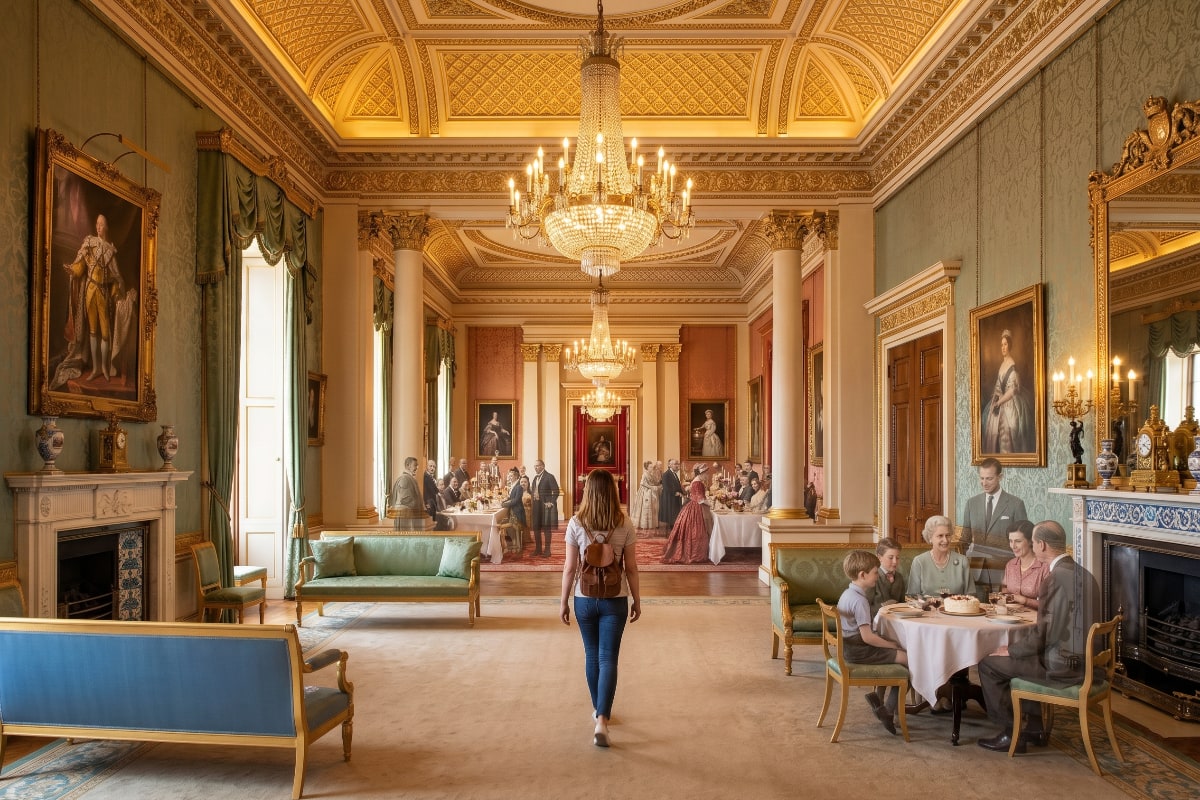
The spectacular State Rooms — with their gilded ceilings, silk-hung walls, and priceless artworks — remain largely as Nash envisaged them in the 1820s. They represent the pinnacle of Regency interior design.
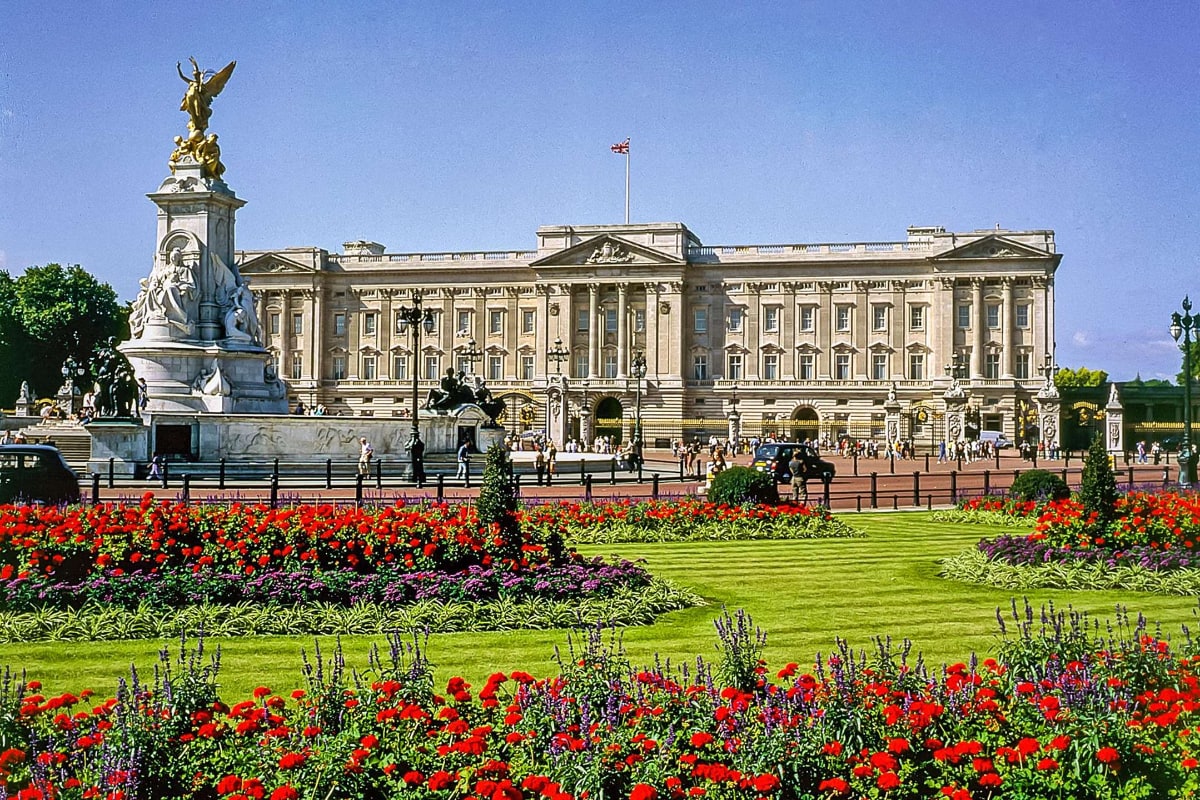
The Palace Facade
The instantly recognisable Portland stone East Wing facade was completed in just 13 weeks in 1913 by Sir Aston Webb. The central balcony — from which the Royal Family greets the nation — was added as part of this refacing.
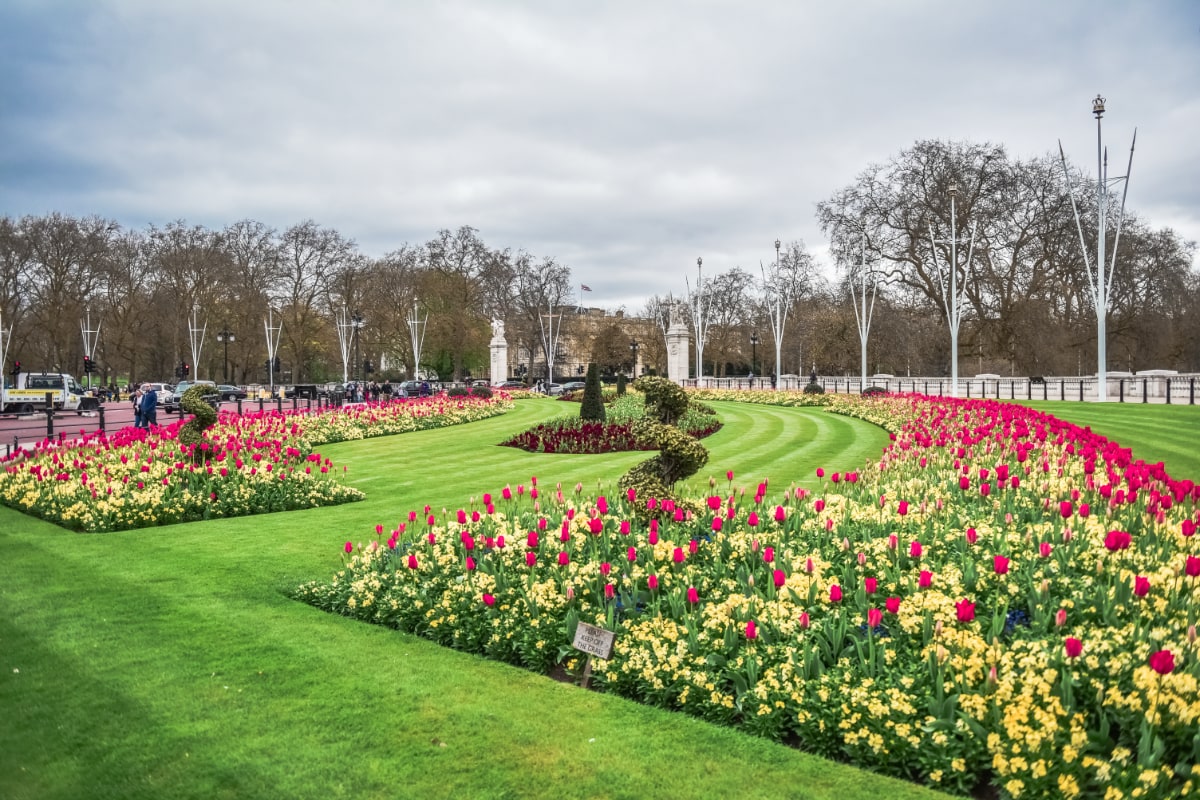
The Royal Garden
The 39-acre garden, designed in the English landscape tradition, conceals a remarkable ecosystem in the heart of London — including a three-acre lake, a helicopter landing pad, a tennis court, and over 30 species of wild birds.
Three Centuries of Royal Collecting
The Royal Collection — one of the most important art collections in the world — numbers over one million objects and has been assembled by successive monarchs over five hundred years. Buckingham Palace houses a significant share of these works, many of which are on display in the State Rooms.
Works by Rembrandt, Vermeer, Rubens, and Leonardo da Vinci hang alongside Sèvres porcelain, Napoleonic treasures captured by Wellington, and furniture commissioned by George IV from the finest craftsmen of his day.
The collection is held in trust by the sovereign and maintained by the Royal Collection Trust, a charity that uses income from visitor attractions to care for the works and make them accessible to the public.
1M+
Objects in the Royal Collection
7,000
Paintings
500,000
Works on paper & prints
30,000
Watercolours & drawings
Those Who Made the Palace
Each monarch has left their mark — in architecture, in the art collection, and in the ceremonies that define the palace today.
George III
r. 1760 – 1820
First royal occupant. Purchased the house for Queen Charlotte and raised his 15 children within its walls. His reign saw the palace begin its transformation into the cultural heart of British power.
George IV
r. 1820 – 1830
The great patron and aesthete who commissioned Nash to create the grand palace we see today. His exquisite taste shaped the State Rooms and filled them with some of the finest art and furniture in the Royal Collection.
Queen Victoria
r. 1837 – 1901
Established the palace as the official sovereign residence and defined many of its traditions. Her 63-year reign saw the palace witness wars, empire, tragedy, and triumph.
Elizabeth II
r. 1952 – 2022
The longest-reigning British monarch and one of the most recognised figures in world history. Her 70 years on the throne saw the palace open its doors to the public and remain at the centre of national life.
Walk Through 300 Years of History
The State Rooms tell the story of this remarkable building and the monarchy that inhabits it. Stand in rooms that have hosted emperors and presidents, coronation banquets, and intimate family celebrations.